Your Expo App Crashes on iOS 27 at Launch: The UIScene Fix
iOS 27 now enforces the scene-based life cycle with a deliberate crash. If your Expo app opens fine on iOS 26 and dies instantly on iOS 27, this is probably why.
A tester sent four identical crash reports for a React Native app built with Expo. The app crashed 0.7 seconds after launch, every time, but only on their phone. Ours were fine.
The difference turned out to be the operating system: their phone was on iOS 27.
The signature
Exception Type:  EXC_BREAKPOINT (SIGTRAP)
Thread 0 Crashed:
0  UIKitCore   ___UIApplicationEvaluateRuntimeIssueForNoSceneLifecycleAdoption_block_invoke + 700
3  UIKitCore   -[UIApplication workspace:didCreateScene:withTransitionContext:completion:]
…
26 TaasQ       static AppDelegate.$main()
EXC_BREAKPOINT in UIKit isn't a bug in your code. It's an assertion, and the function name says exactly what it's asserting: no scene life-cycle adoption.
Apple has been warning since iOS 13 that apps should adopt UIScene, the life cycle where windows belong to scenes rather than to the app delegate. iOS 27 stopped warning. An app built the old way, creating its UIWindow in application(_:didFinishLaunchingWithOptions:), now asserts at launch.
Why Expo apps hit it
If you use Continuous Native Generation (no committed ios/ folder), your AppDelegate.swift comes from Expo's prebuild template. In our version (Expo SDK 57), that template still does this:
window = UIWindow(frame: UIScreen.main.bounds)
factory.startReactNative(withModuleName: "main", in: window, launchOptions: launchOptions)
That's the app-delegate life cycle. And there's no scene configuration in Info.plist.
The good news: Expo 57 already ships the other half. ExpoAppSceneDelegate is a UIWindowSceneDelegate whose own documentation says it's "required by the iOS 27, which asserts at launch unless the app adopts the scene-based life cycle." It creates the window from the connecting scene, starts React Native into it, and forwards URL and user-activity events. Nothing in the template turns it on yet.
The fix: a small config plugin
Three changes, all through a config plugin so they survive every expo prebuild:
1. Declare a scene in Info.plist that uses Expo's delegate. Its Objective-C name is fixed (EXExpoAppSceneDelegate), so no Swift file is needed:
cfg.modResults.UIApplicationSceneManifest = {
  UIApplicationSupportsMultipleScenes: false,
  UISceneConfigurations: {
    UIWindowSceneSessionRoleApplication: [
      { UISceneConfigurationName: 'Default Configuration', UISceneDelegateClassName: 'EXExpoAppSceneDelegate' },
    ],
  },
}
2. Make the app delegate provide the React Native factory to the scene delegate, by conforming to ExpoReactNativeFactoryProvider. The template already has the window and reactNativeFactory properties the protocol needs.
3. Stop the app delegate from creating the window and starting React Native. The scene delegate does both now. Keep everything else, including FirebaseApp.configure() and your URL handlers:
out = out.replace(/class AppDelegate: ExpoAppDelegate\b/, 'class AppDelegate: ExpoAppDelegate, ExpoReactNativeFactoryProvider')
out = out.replace(/^\s*window = UIWindow\(frame: UIScreen\.main\.bounds\)\s*\n/m, '\n')
out = out.replace(/^\s*factory\.startReactNative\(\s*withModuleName: "main",\s*in: window,\s*launchOptions: launchOptions\)\s*\n/m, '\n')
if (/factory\.startReactNative\(/.test(out)) throw new Error('template changed')
That last line matters. Regex-editing generated code is fragile, so if the template ever stops matching, the plugin fails the build instead of shipping an app that crashes. A unit test covers the transform, running it twice, and a changed template.
Verifying it
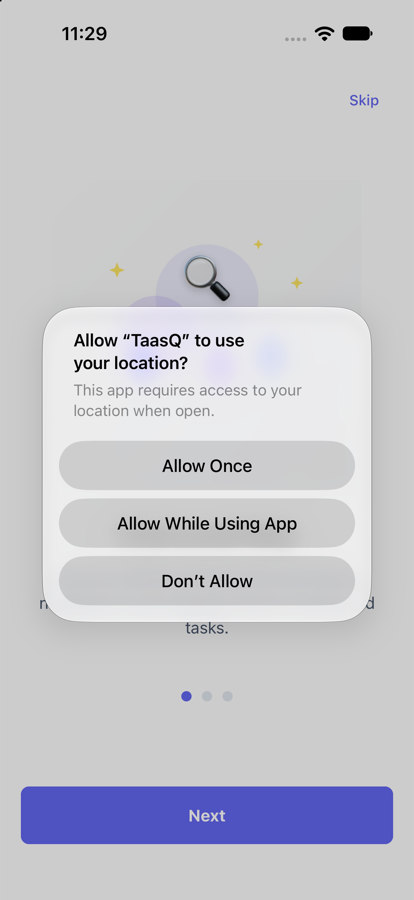
We built a Release configuration and ran it on an iOS 27.0 simulator (iPhone 18 Pro). The unfixed build died within a second; the fixed one launched, stayed running and drew the onboarding screen:
Two things to know when you ship it:
- It's native code. An over-the-air update can't deliver it. You need a new store build.
- If you use EAS's fingerprint runtime policy, build from a clean
node_modules. Our first cloud build failed on a fingerprint mismatch because the local test build had written files into a dependency's folder. A freshnpm cimade the fingerprints match.
Checklist
- Crash reports show
_UIApplicationEvaluateRuntimeIssueForNoSceneLifecycleAdoptionon iOS 27 - Add a scene manifest pointing at
EXExpoAppSceneDelegate - AppDelegate conforms to
ExpoReactNativeFactoryProviderand no longer creates the window - Prebuild, build, launch on an iOS 27 simulator
- Ship a new binary
We found this while shipping a mobile app with Spaces, an AI software factory that turns tickets into reviewed, tested pull requests. It's on GitHub.